

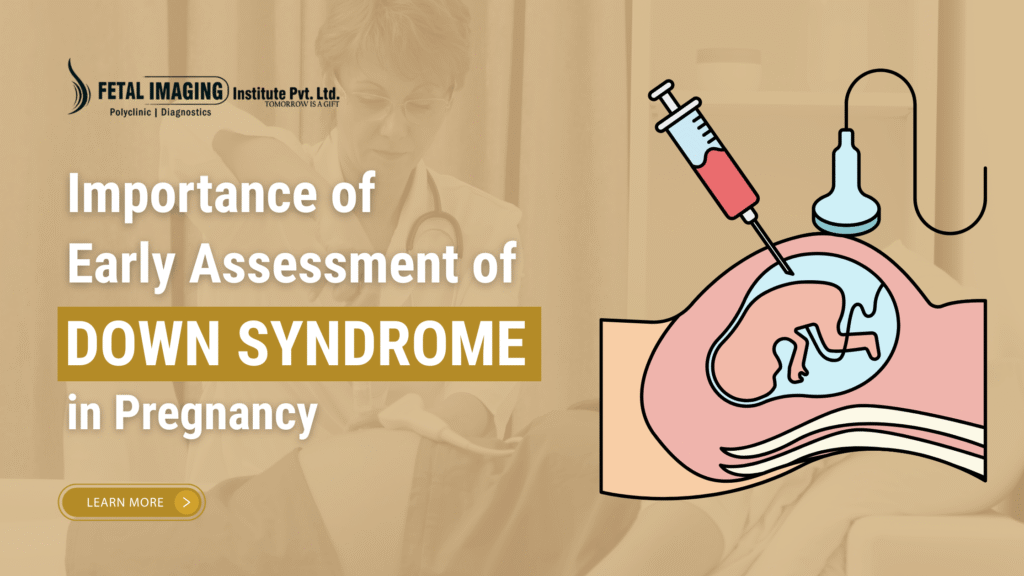
Early assessment of the risk of fetal Down syndrome has significant importance in preparing for potential health challenges in pregnancy and making plans for fulfilling a child’s needs after birth. The early screening is essential for detecting potential risk factors such as Anatomical defects or chromosomal abnormalities. Assessing Down syndrome or Trisomy 21 at the early stage has several benefits, including making important decisions and enabling parents to plan for their child’s future. In this blog article, the benefits of early assessment of Down syndrome in pregnancy have been focused while the necessary screening and diagnostic tests to detect risk factors during pregnancy are discussed briefly.
Down syndrome Conditions
Down Syndrome is a genetic disorder caused by abnormal cell division. It may lead to several developmental changes, such as a delay in development and intellectual disorder. Excess genetic material, such as an extra number 21 chromosome, leads to Down syndrome.
Several common signs of Down syndrome are: flat face, short neck, small head, intellectual disability, small hands and feet, vision problems, unusual shape of ears, poor muscle tone, and crease in the palm. Intellectual disability includes slow learning, poor judgment, and delay in speech and language development.
Ways for early assessment of Down Syndrome in pregnancy
During pregnancy, screening tests and Diagnostic tests are essential for the early risk assessment of Down Syndrome. Health care professionals suggest the best tests to detect the potential risk and will discuss the health condition based on the test results. The ways are as follows:
Screening for Down syndrome
Screening for Down Syndrome is conducted to indicate the risk of Down Syndrome during pregnancy. It is a part of prenatal check-ups. During the first trimester of pregnancy, the ID is performed in two steps.
a. Nuchal Translucency Screening Test- An area of the back of a baby’s neck is measured through ultrasound. Fluid is collected from the neck tissue for testing.
b. Blood Test- Through a blood test, the level of Plasma protein A that PAPP-A is measured to detect any abnormality in the baby’s health. The pregnancy hormone known as HCG or Human Chorionic Gonadotropin, is also being checked to indicate any issues.
As per the report of the blood test and the ultrasound, your healthcare provider will suggest the best treatment after assessing the potential risk of Down syndrome.
During the Second Trimester blood test is done to check four substances: estriol, alpha fetoprotein, inhibin A, and HCG.
c. Cell-free DNA test– A small amount of DNA is tested that is released from the placenta into the bloodstream of the pregnant woman. The cell-free DNA is checked for an extra chromosome of Down Syndrome. This test can be performed from the 10th week of pregnancy. The positive result of the test indicates an issue with the unborn baby in the womb.
Read more: Genetic Disorder in Pregnancy: What Every Expectant Mother Must Know
Diagnostic Tests for Down syndrome
A diagnostic test is recommended to ensure that your baby has Down Syndrome as well as to assess the issues in pregnancy. The necessary diagnostic tests are discussed in the following passages:
1. CVS (Chorionic villus sampling)
During the first Trimester of pregnancy, it is suggested to analyze Down syndrome in your baby. In this diagnostic test, a sample from the placenta is collected to check the baby’s chromosomes.
Amniotic fluid that surrounds the baby in the womb is removed through a needle by inserting it into the uterus of the mother. After 15 weeks of pregnancy, during the Second Trimester, for detecting the risk of Down syndrome.
Importance of Early Assessment of Down Syndrome in Pregnancy
Early risk assessment of Down Syndrome in Pregnancy is necessary for many reasons, and the reasons are as follows:
- Making an important decision: Early detection of risk factors is helpful to take immediate action in pregnancy. You can make decisions about other options to cop with these difficulties. This early understanding also facilitates your healthcare provider to start treatment according to your health condition.
- Further diagnosis: Early detection helps to understand the necessity of more diagnostic tests to analyse the problem factor during pregnancy. If in a screening test any difficulty is assumed, then you can go for CVS or Amniocentesis to diagnose the issue more accurately
- Recognising other conditions: Early assessment of risk factors not only helps to detect Down Syndrome it also helps to identify the risk of Trisomy 13 and Trisomy 18.
- Detecting Anatomical defects- During the first-trimester screening test, ultrasound helps to identify the anatomical defects in the baby’s body. Anatomical defects such as cardiac issues, cleft lip, or Spina Bifida need to be assessed at an early stage for the overall health benefit of the mother and the unborn baby in the womb.
Fetal Imaging Institute is a popular prenatal Diagnostics clinic near you, providing cost-effective and prompt diagnostic services with dedicated care and attention. Our team of faculty includes expert specialists and experienced doctors who provide personalised care and treatment. Our primary goal is to provide high-quality, targeted care for high-risk pregnancies, including early detection and diagnosis of Down syndrome and other chromosomal and anatomical abnormalities in the fetus. We are reputed for handling high-risk pregnancies and for offering a safe pregnancy.
Conclusion
The Early assessment of Down Syndrome in pregnancy is important for the overall health and well-being. Taking important decisions regarding further diagnostic tests and treatment can be possible by the early detection of difficulties in pregnancy. Several screening tests and Diagnostic tests are performed for the early detection of Down syndrome. Anatomical defects can be assessed at an early stage through diagnostic tests during pregnancy. Consulting with efficient gynecologists of a renowned fetal care clinic to get professional care and support during pregnancy is essential for overall health benefits.
Follow us on
- Facebook: www.facebook.com/FIMINSTKOLKATA
- Instagram: www.instagram.com/fetalimaginginstituteofficial
- YouTube: www.youtube.com/@FetalImagingInstituteoffical
Visit at